
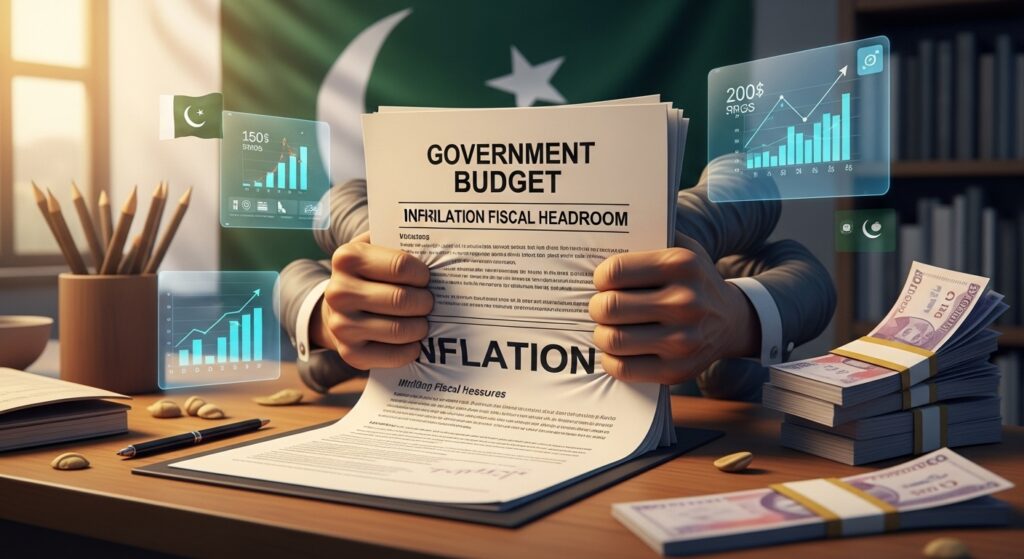
High inflation has become the defining feature of Pakistan’s macroeconomic landscape, reshaping not only household consumption but also the state’s fiscal priorities. The combination of cost-push and demand-pull inflation, captured in the latest PBS price data and SBP monetary reports, underscores how price instability is constraining recurrent budget headroom—limiting the government’s ability to sustain essential expenditures without widening the fiscal deficit.
Understanding Pakistan’s Inflation Dynamics through SBP and PBS Data
Recent PBS inflation reports indicate headline inflation hovering around double digits, driven by food, energy, and housing. The State Bank of Pakistan (SBP) has flagged inflation persistence in its Monetary Policy Statements, attributing it to imported cost pressures, supply-side disruptions, and administered price adjustments.
Even as global commodity prices stabilize, Pakistan’s domestic price momentum remains strong—reflecting structural inefficiencies in supply chains, weak competition in markets, and currency depreciation. Inflation’s fiscal impact is twofold: it inflates nominal expenditures while eroding the real value of budget allocations.
Cost-Push and Demand-Pull Drivers: Domestic and External Factors
The inflation trajectory is being shaped by a mix of external shocks and domestic fiscal pass-through. Rising import costs—particularly for petroleum and food—have elevated production expenses across sectors. Meanwhile, exchange rate depreciation and energy tariff adjustments amplify cost-push effects.
On the demand side, public sector wage revisions, pension increases, and energy subsidies have contributed to demand-pull inflationary pressures. The fiscal impulse from these commitments, while politically necessary, perpetuates inflation expectations and narrows recurrent spending room.
Erosion of Recurrent Budget Headroom amid Persistent Price Pressures
High inflation magnifies nominal expenditure requirements for ministries and provincial departments. Salaries, utilities, and administrative costs have increased faster than revenue mobilization, forcing frequent supplementary grants.
In FY 2024–25, recurrent expenditures are projected to consume nearly 85% of total federal outlays, according to Finance Division data. This leaves minimal fiscal headroom for discretionary spending, particularly in operations and maintenance—critical for service delivery continuity.
Fiscal Linkages: Wage, Pension, and Subsidy Pressures in a High-Inflation Setting
Recurrent spending categories such as wages, pensions, and subsidies are highly inflation-sensitive. Each percentage point rise in inflation triggers compensation adjustments that cumulatively add billions to the federal wage bill.
Energy subsidies—introduced to protect consumers from price volatility—further strain fiscal space. These subsidies, while cushioning inflation in the short term, deepen long-term fiscal rigidities. SBP has repeatedly emphasized the need for targeted subsidy rationalization to maintain macro-fiscal balance.
Impact on Development and Non-Development Spending Balance
The inflation-induced surge in recurrent obligations has caused a crowding-out effect on the Public Sector Development Programme (PSDP). With nominal budget ceilings fixed, every additional rupee spent on salaries and subsidies reduces allocations for infrastructure, education, and health.
Provincial governments, whose budgets are also inflation-constrained, face similar trade-offs—delaying projects and under-executing development funds to accommodate recurrent bills.
Macroeconomic Implications: Interest Rates, Deficit Financing, and Fiscal Space
SBP’s restrictive monetary stance, designed to tame inflation, has raised domestic borrowing costs. High policy rates translate into elevated interest payments, which already absorb over one-third of total expenditures.
This dual burden—rising nominal costs and expensive borrowing—erodes fiscal flexibility. Persistent inflation also complicates revenue forecasting, as real tax yields stagnate despite nominal gains.
Policy Lessons from Historical and Regional Comparisons
Comparative experience across South Asia shows that inflation containment is crucial for fiscal health. Countries that combined fiscal restraint with supply-side stabilization—such as Bangladesh—have managed better budget predictability.
For Pakistan, the lesson is clear: fiscal discipline must complement monetary tightening. Inflation cannot be managed sustainably through rate hikes alone; it requires budgetary reprioritization and institutional expenditure controls.
Actionable Recommendations
- Reinforce inflation forecasting units within Finance Division for expenditure planning.
- Link wage and pension adjustments to medium-term inflation projections, not ad-hoc revisions.
- Rationalize subsidies by targeting the bottom deciles through digital welfare platforms.
- Coordinate fiscal and monetary policy via a structured SBP–Finance Division macro board.
- Strengthen expenditure efficiency audits to mitigate inflation-induced leakages.
Conclusion (Forward-Looking Fiscal Insights for FY 2025–26)
As Pakistan prepares for FY 2025–26, inflation management will define fiscal strategy. Without easing price pressures, the recurrent budget headroom will remain compressed, limiting fiscal responsiveness to development and social needs.
Stabilizing prices through prudent fiscal discipline, credible subsidy targeting, and expenditure prioritization is essential for restoring both fiscal sustainability and public confidence in policy continuity.
This article was published on publicfinance.pk.
FAQs (for FAQ Schema)
Q1: How does inflation affect Pakistan’s recurrent budget?
Inflation raises the cost of wages, pensions, and subsidies, consuming a larger share of the budget and reducing fiscal space for development and operational spending.
Q2: Why is SBP’s monetary policy critical in managing fiscal pressures?
A tight monetary stance curbs demand and inflation expectations, but it also raises domestic borrowing costs—making fiscal coordination essential to sustain stability.
Q3: What reforms can improve fiscal resilience under inflation?
Medium-term wage frameworks, targeted subsidies, and improved expenditure forecasting can protect fiscal headroom and enhance budget predictability.
