
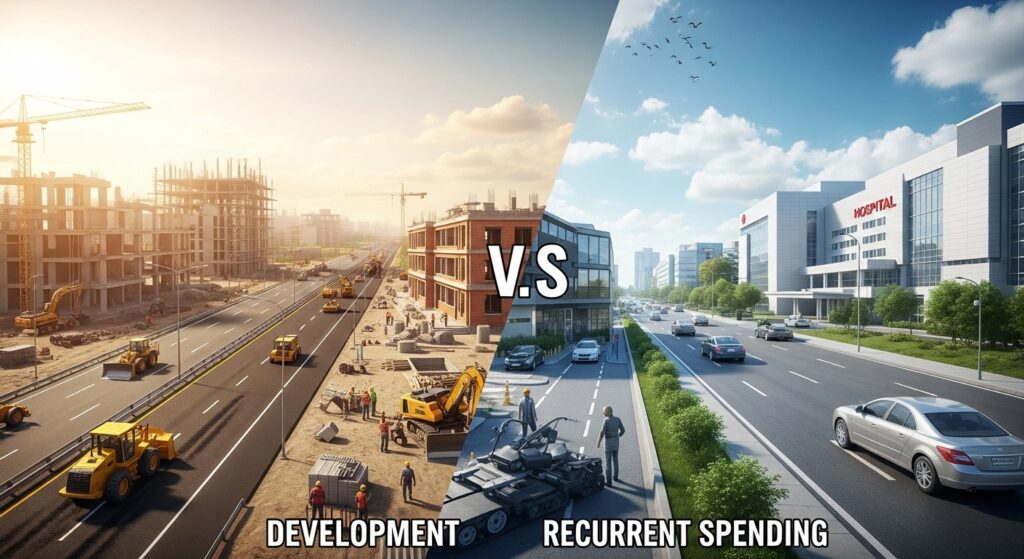
The Interplay of Development vs Recurrent Spending under Constrained Resources
Effective budget management requires balancing development and recurrent expenditures, particularly in countries like Pakistan with constrained fiscal resources. Recurrent spending, including salaries, pensions, and debt servicing, often dominates budgets, leaving limited fiscal space for development projects critical to long-term growth. Understanding this interplay is key to fiscal sustainability, service delivery, and PFM effectiveness.
Recurrent Spending: Necessity vs Pressure
Recurrent expenditures are non-discretionary and politically sensitive, covering salaries, pensions, debt servicing, and operational costs of government departments. High recurrent obligations reduce budgetary flexibility, often crowding out development spending. For Pakistan, debt servicing alone consumes a significant portion of annual revenues, limiting funds for infrastructure, health, and education programs, as highlighted in Ministry of Finance and SBP reports.
Development Spending: Investment for Growth
Development expenditures fund infrastructure, social services, and economic projects that generate long-term benefits. Adequate investment in roads, schools, and energy projects is crucial for productivity, human capital development, and private sector growth. However, under fiscal constraints, provinces and federal government often face difficult trade-offs, delaying or scaling down development programs to meet recurrent obligations.
Trade-Offs and Fiscal Implications
The tension between development and recurrent spending has several fiscal implications:
- Debt Pressure: High recurrent expenditure, especially interest payments, reduces fiscal space for development.
- Budget Execution Challenges: Underfunded development projects lead to lower execution rates and delays, affecting service delivery.
- Growth vs Sustainability: Overemphasis on recurrent spending limits growth-oriented investment, while aggressive development spending without fiscal prudence can worsen deficits.
Policy Recommendations
- Prioritize medium-term fiscal planning to balance recurrent and development needs.
- Implement expenditure rationalization, especially in non-essential recurrent items.
- Enhance budget transparency with citizen budgets and online dashboards for tracking both spending types.
- Strengthen debt management and revenue mobilization to create more fiscal space for development.
- Adopt performance-based budgeting to link development spending with tangible outcomes.
Balancing development and recurrent spending under constrained resources is a central challenge for Pakistan’s PFM system. Strategic prioritization, enhanced fiscal discipline, and data-driven budgeting are essential to ensure that public resources achieve both short-term operational needs and long-term growth objectives.
This article was published on publicfinance.pk.
FAQs:
- What is recurrent spending?
Expenditures required for routine government operations, including salaries, pensions, and debt servicing. - Why is development spending important?
It funds projects that generate long-term economic growth, infrastructure, and social development benefits. - How can Pakistan balance both under limited resources?
Through medium-term fiscal planning, expenditure rationalization, performance-based budgeting, and revenue mobilization.
