Understanding Pakistan’s Debt Servicing Dynamics in the Fiscal Framework
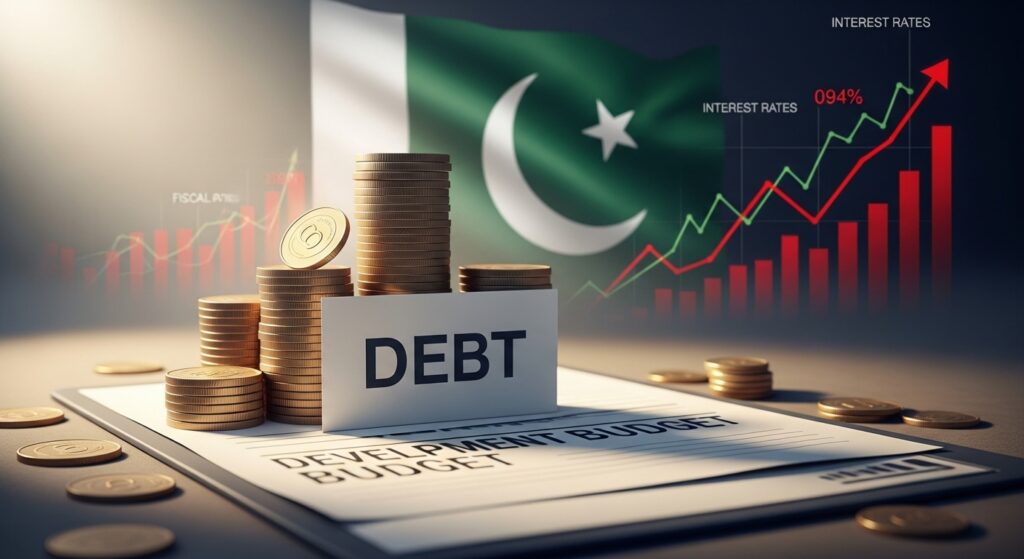
Pakistan’s fiscal architecture is increasingly defined by its debt servicing obligations, which have outpaced growth in both revenue and development spending. According to Finance Division data, interest payments absorbed over 55 percent of total federal expenditure in FY 2024–25, up from around 45 percent just two years earlier. This growing burden reflects a combination of rising domestic borrowing costs, currency depreciation, and the refinancing of short-term external liabilities.
Debt servicing lies at the core of Pakistan’s fiscal imbalance: as revenues stagnate and borrowing costs climb, limited fiscal space remains for development, social protection, and infrastructure investment—the very areas that drive long-term economic resilience.
External vs. Domestic Debt: Composition and Fiscal Pressures
Pakistan’s total public debt—both external and domestic—has exceeded PKR 80 trillion. Domestic debt constitutes roughly two-thirds, driven by short-term instruments like Market Treasury Bills and Pakistan Investment Bonds, while external debt remains vulnerable to exchange rate fluctuations and global interest rate cycles.
External servicing surged in FY 2024–25, with the rupee’s depreciation amplifying repayment obligations in dollar terms. Meanwhile, SBP’s tight monetary stance to control inflation elevated domestic borrowing costs, further compounding the fiscal squeeze. The combination leaves policymakers caught between maintaining macro stability and financing essential development projects.
Rising Servicing Costs and the Fiscal Space Dilemma
Debt servicing now competes directly with all other budgetary priorities. In the FY 2024–25 federal budget, interest payments were projected to exceed the combined allocations for defense, subsidies, and development spending. This imbalance underscores Pakistan’s structural challenge: financing past debt is crowding out future growth.
Fiscal space for social and development expenditures continues to shrink. With primary deficits persisting and tax-to-GDP ratios stagnant around 9.5 percent, the government faces a narrow path between austerity and public sector investment—a tension likely to define fiscal debates in FY 2025–26.
Trade-Offs in Public Spending: Development, Social, and Operational Budgets
The most visible trade-off has been between development spending (PSDP/ADPs) and debt servicing obligations. Federal and provincial development allocations have seen successive cuts to accommodate rising interest payments. Provinces, dependent on federal transfers, have also been forced to delay infrastructure projects and scale back social sector programs.
These adjustments undermine long-term growth prospects and erode the effectiveness of public sector development programs (PSDPs). In practice, the state’s fiscal choices now revolve around short-term solvency versus long-term investment capacity.
Macroeconomic Implications: Inflation, Exchange Rate, and Fiscal Sustainability
High debt servicing costs perpetuate a cycle of deficit financing, which pressures the exchange rate, fuels inflation, and discourages private investment. External repayment needs also strain foreign exchange reserves, leaving Pakistan dependent on rollovers and IMF disbursements.
The IMF’s Debt Sustainability Analysis highlights that Pakistan’s interest-to-revenue ratio exceeds 60 percent, one of the highest among emerging economies. This signals fiscal stress and vulnerability to shocks such as rising global interest rates or lower remittance inflows.
Policy Lessons from Comparative and Historical Experiences
Countries like Egypt and Ghana faced similar fiscal compression due to excessive debt servicing. Their experiences suggest that a combination of medium-term debt restructuring, domestic revenue mobilization, and expenditure reprioritization can restore fiscal sustainability. Pakistan’s fiscal reforms must be sequenced: improve tax compliance and efficiency, rationalize non-development expenditures, and adopt a credible medium-term debt management strategy.
The lessons from earlier IMF programs are clear — fiscal consolidation without growth-oriented investment only deepens stagnation.
Actionable Recommendations
- Adopt a Medium-Term Debt Strategy: Strengthen the Debt Policy Coordination Office for data-driven borrowing and risk management.
- Broaden the Tax Base: Implement administrative and policy reforms to lift the tax-to-GDP ratio above 12 percent over three years.
- Rationalize Current Expenditure: Contain subsidies, operational costs, and unproductive transfers.
- Prioritize Productive Spending: Protect PSDP allocations for infrastructure, energy, and human capital.
- Strengthen Coordination: Ensure alignment between fiscal and monetary policies to stabilize debt servicing costs.
Conclusion: Toward a Sustainable Fiscal Future
As Pakistan enters FY 2025–26, debt servicing remains the single largest constraint on fiscal flexibility. Without sustained reforms in revenue generation, expenditure efficiency, and debt management, the cycle of borrowing to pay interest will persist. A deliberate shift toward fiscal discipline coupled with growth-supportive investment is essential to restore balance between solvency and development.
This article was published on publicfinance.pk.
FAQs (for FAQ Schema)
1. Why is Pakistan’s debt servicing burden rising?
Pakistan’s debt servicing burden has risen due to higher domestic interest rates, currency depreciation, and large short-term external borrowings, all of which increase repayment costs.
2. How does high debt servicing affect development spending?
High debt servicing diverts resources away from development programs, forcing cuts in infrastructure, health, and education spending to meet repayment obligations.
3. What can Pakistan do to manage its debt more sustainably?
Pakistan can strengthen debt management, improve tax collection, rationalize expenditures, and negotiate better refinancing terms to reduce long-term fiscal risks.
